Yo-Yo intermittent recovery test (IR1 and IR2)
The Yo-Yo intermittent recovery test is a series of 2 × 20 m shuttle runs at increasing speeds, each followed by 10 seconds of active recovery. It ends when you fail to reach the line in time twice; your result is the total distance, which converts to an estimated VO2 max.
How to run it
What you need
- A flat surface with two lines 20 m apart and a recovery cone 5 m behind the start line
- A tape measure and cones
- The audio cues (the VO2 Maximizer app plays and scores them)
Step by step
- Mark the start line, a turning line 20 m away, and a cone 5 m behind the start line for recovery.
- On the beep, run 20 m out and 20 m back (one bout = 40 m), arriving before the next beep.
- Use the 10-second recovery to jog around the cone (2 × 5 m) and be ready on the line for the next beep.
- The speed rises with each level. IR1 starts at 10 km/h; IR2, for well-trained athletes, starts at 13 km/h.
- The test ends the second time you fail to reach the finish line in time. Record the last level reached.
Let VO2 Maximizer play the cues and score it ↗
The formula
IR1: VO2 max = 0.0084 × distance (m) + 36.4. IR2: VO2 max = 0.0136 × distance (m) + 45.3. The distance comes from the level table (each bout = 40 m).Equations from Bangsbo et al. (2008). They estimate VO2 max for trained players; use the distance itself to compare your own results.
Yo-Yo test VO2 max calculator
Also on its own page: Yo-Yo test calculator.
Records
The Yo-Yo IR1 has a theoretical ceiling of level 23.8 (about 3,700 meters), but the highest verified score in published sources is Harry Grant’s 22.8 at the GWS Giants Academy preseason in 2020. Most of the elite tier sits between 22.0 and 22.8 across Australian Football, English football, basketball, cricket, and rugby. The highest verified female mark is Ambrosia Malone at 20.2 (Queensland Academy of Sport, October 2020).
The full list, with sources, is in Yo-Yo IR1 and IR2 World Records: Highest Levels Ever.
Articles about the Yo-Yo test
Yo-Yo Test Alternatives: Cooper, Balke, Beep, 1.5mi Ranked
Cooper, Balke, beep, 1.5-mile run, and lab tests all replace the Yo-Yo IR1 and IR2 test. Here is which I trust most, and when I use each.
Read the guide ↗What Your Yo-Yo IR1 and IR2 Score Actually Means
Just ran a Yo-Yo IR1 or IR2 test? Here is what your distance translates to in VO2 max, the sport-specific benchmarks, and what to do with the number.
Read the guide ↗Is the Yo-Yo IR1/IR2 Test Outdated? The Verdict
The Yo-Yo IR1 and IR2 from Bangsbo and Krustrup are the most modern field tests in this family: validated for intermittent-sport athletes and still unmatched.
Read the guide ↗How to Run a Yo-Yo IR1/IR2 Test (Step-by-Step)
Setup, cue handling, and stop rules for Yo-Yo IR1 and IR2: the football-specific shuttle test by Bangsbo, with Krustrup-validated VO2 max formulas.
Read the guide ↗Yo-Yo IR1 and IR2 World Records: Highest Levels Ever
The verified highest Yo-Yo Intermittent Recovery scores ever recorded, who set them, and the VO2 max the top levels actually predict.
Read the guide ↗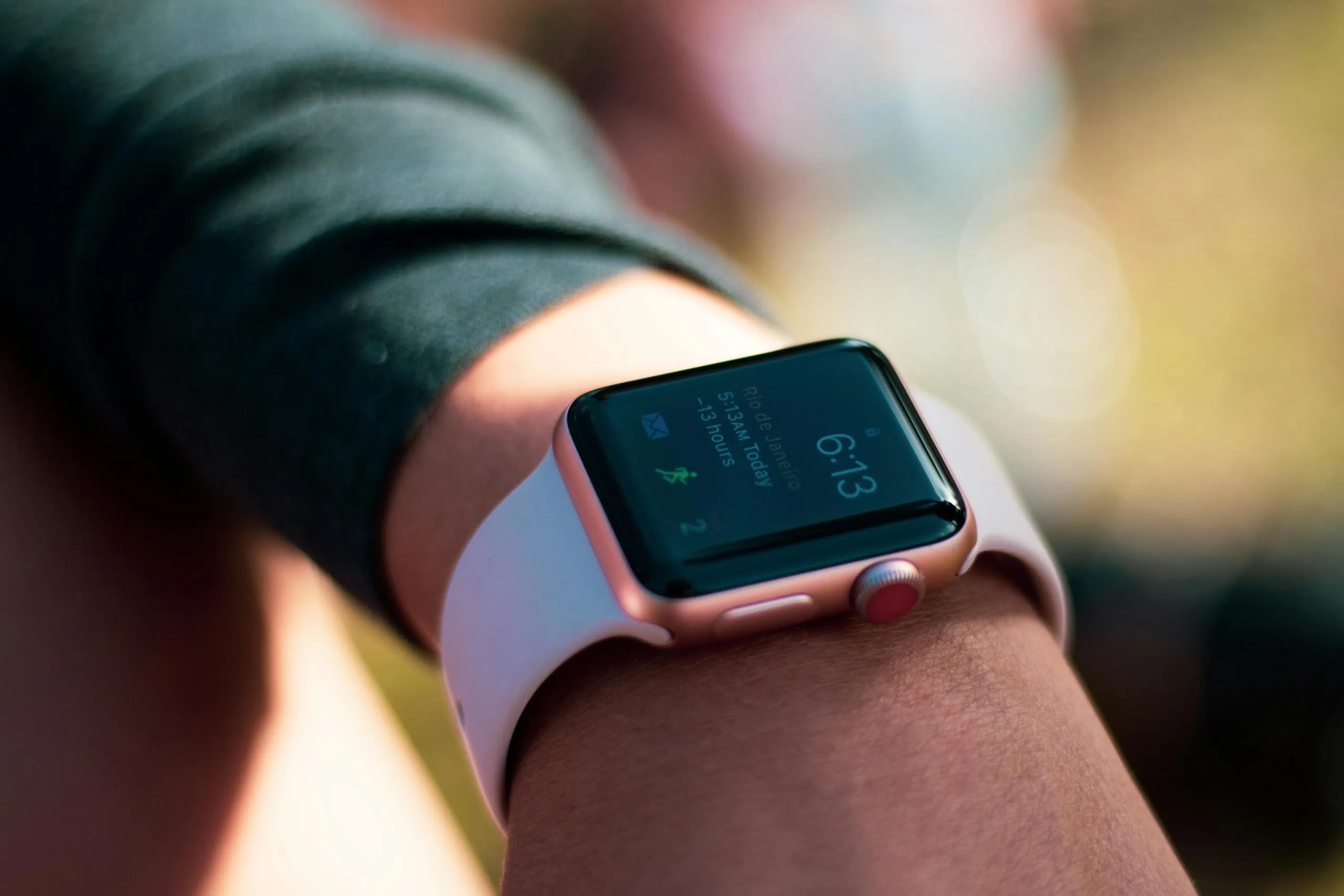
Apple Watch Yoyo Test: Hands-Free VO2 Max
Run the Yoyo intermittent recovery test on your Apple Watch with haptic cues. Hands-free protocol for soccer, basketball, and team-sport athletes.
Read the guide ↗Frequently asked questions
What is the difference between Yo-Yo IR1 and IR2?
IR1 starts at 10 km/h and suits most athletes. IR2 starts at 13 km/h and increases faster, so it is meant for well-trained athletes.
Is the Yo-Yo test the same as the beep test?
No. The beep test is continuous, while the Yo-Yo intermittent recovery test adds a 10-second active recovery after every 40 m bout.
Sources
- Bangsbo J, Iaia FM, Krustrup P. The Yo-Yo intermittent recovery test: a useful tool for evaluation of physical performance in intermittent sports. Sports Med. 2008;38(1):37-51.
- Krustrup P, Mohr M, Amstrup T, et al. The Yo-Yo intermittent recovery test: physiological response, reliability, and validity. Med Sci Sports Exerc. 2003;35(4):697-705.